
The wrong timber can make a beautiful interior feel flat, while the right one can make a room feel warm, deep, and carefully designed. That is why choosing the wood should happen before choosing the final colour or surface.
A Shou Sugi Ban interior is not only about creating a dark wall. The timber species affects the grain, texture, colour, char response, stability, and overall character of the finished surface. Spruce, Larch, Japanese Cedar, and Accoya can all create different results. The best choice depends on what you want the room to feel like and what the material needs to do.
Start With Your Interior Purpose
However, before evaluating timber species, pay close attention to where the boards will be applied. The feature wall in the silent living room is quite different from the ceiling in the big commercial space. In one case, the designer will look for a good grain and texture, and in another case, more dimensionally stable timber would be required.
Consider these questions before selecting the timber:
- Is the timber used for a wall, ceiling, joinery, or details?
- Do you require a dark and dramatic interior or a warm and natural one?
- Do you want the strong grain pattern or something calm?
- Is the surface covered by the boards quite large?
- Is dimensionally stable timber required?
- What profiles and directions of board installation are suitable for that particular room?
The range of Inflamed Interior timbers includes timber for walls, ceilings, joinery, and architectural details in vertical and horizontal directions of board installation.
Compare The Main Timber Species
Different species react differently to heat and finishing. Grain, density, natural variation, and board dimensions all influence the final appearance.
| Timber | Main Character | Good For |
| Spruce | Clear, even grain and flexible finish options | Large interior surface and balanced design |
| Larch | Dense, resinous and naturally distinctive | Stronger natural character |
| Japanese Cedar | Traditional Sugi with a softer, textured appearance | Authentic Yakisugi-inspired interiors |
| Accoya | Highly stable modified timber | Projects where stability is a major priority |
Spruce is frequently chosen owing to its relatively mild grain and many finishing options. Larch has a more distinctive nature than the other types, whereas Japanese Cedar relates most closely to the historical Sugi wood that was used in Yakisugi. Accoya is unique due to its highly stable material structure.
Think About Grain And Texture
It should be noted that timber should not be selected according to color alone. People entering the room see both the surface and the way light behaves on the grain, and the difference in texture between different boards.
For the interior design that aims to create a more tranquil environment, an even-grained timber could be considered. For an accent element of architecture, a timber with more natural character might be a better choice.
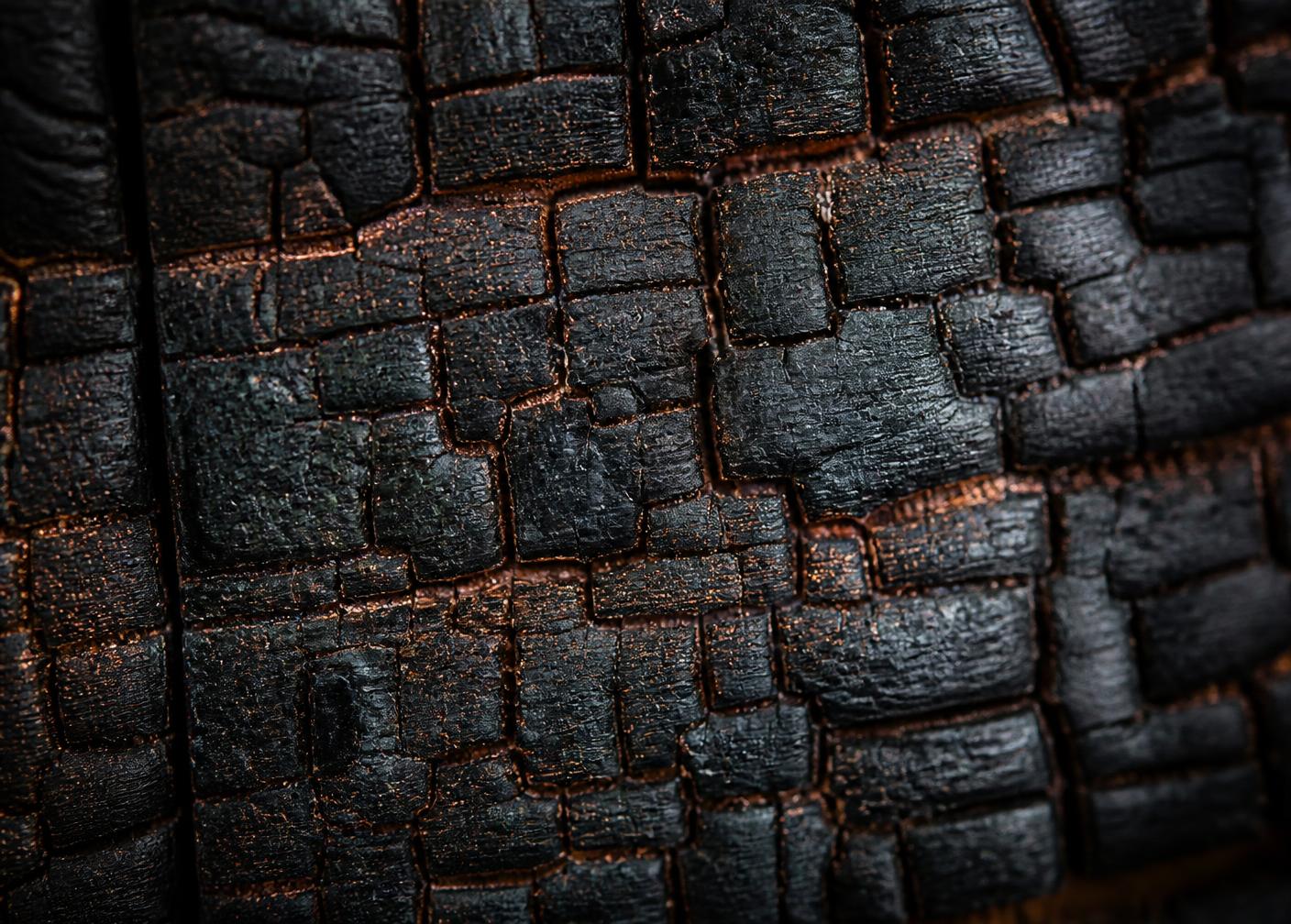
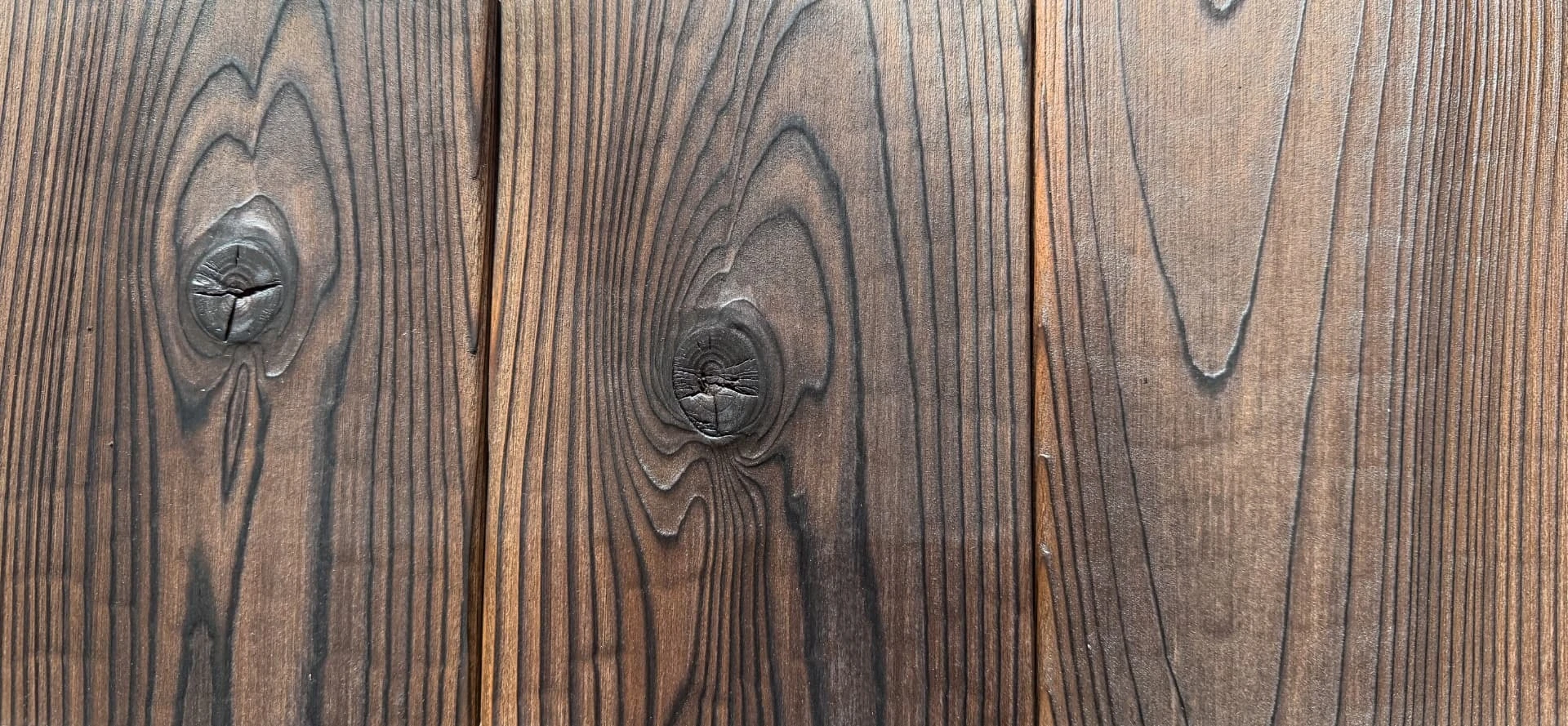
Of course, there is the issue of surface treatment. The deep-char surface leaves more carbon and provides more sculptural quality. The brushed surface removes part of the carbon layer and reveals the structure of the wood grain. Inflamed refers to these as the KAEN and KIME surface families, respectively.
Match Timber To Room Style
One functional strategy for picking the wood is to begin with what kind of atmosphere you desire.
If it's an environment such as a contemporary minimalist space, calm grain with a controlled dark finish will make for a powerful background without cluttering the room up. In a lodge, restaurant, or hospitality environment, visible grain along with a warmer tone could create a natural effect.
Examples:
- Contemporary living room: Spruce with a controlled dark finish
- Natural hospitality environment: Larch with visible natural character
- Japanese-style inspiration: Japanese Cedar
- Very stable choice: Accoya
- Feature ceiling: Pick a wood species and profile that will maintain its consistency over the large area
This method is more beneficial than simply selecting the timber because it looks good in a photograph. Natural timber differs from board to board and even from batch to batch, thus physical samples matter too.
Understand How Charring Changes Timber
Charring is not just about burning wood to make it black. The species of the wood, moisture, grain, geometry of the boards, and finish that is going to be applied affect the way it will behave during the process.
The controlled charring process occurs at the manufacturing stage. If necessary, brushing takes place to remove some charred layer and expose the grain below. Then finishing oil is applied depending on the chosen product.
Using a Shou Sugi Ban torch can seem like the most obvious thing to do upon learning about this technique; however, the manufacturing process needs far more control than just using an open flame. Wood does not necessarily behave in the same way each time.
Shou Sugi Ban torch can be used for the initial transformation of the wood; however, the final result of the interior material will depend on many other factors apart from the charring process.
Consider Accoya For Stability
Special attention needs to be paid to Accoya wood if dimensionally stable wood is specified. Accoya is a modified wood product that provides high dimensional stability. Inflamed includes this type of wood among its interior timber products together with Spruce, Larch and Japanese Cedar.
This is not the automatic choice for all the rooms. The choice of timber must take into account other aspects such as design, finish, profile, size and installation technique.
Accoya wood becomes highly relevant if high dimensional stability of the wood board is needed and charred timber appearance is specified.
Choose Finish After Timber
It is easy to think that one should choose a black, brown, or grey finish first and then find timber that corresponds to it. However, a more appropriate way would be to take both into account.
Dark finishes may appear quite differently on various timber species due to differences in their grain, density, and char response.
The correct sequence of steps is as follows:
- Select the application in the interior.
- Determine the required visual quality.
- Research timber species.
- Look at the deep-char and brushed finishes.
- Consult profiles and sizes available.
- Ask for samples.
- Finalize the selection.
This procedure will help to avoid the most common mistake that consists of selecting a certain color based only on the screen picture.
Make The Choice Based On Evidence
Good timber selection involves a balance between personal taste and factual knowledge. Rather than the question, “What kind of wood is most attractive?,” one should be thinking, “What wood is appropriate for this space?”
A simple decision guide can help:
| Your Main Priority | Timber Direction |
| Calm and versatile appearance | Spruce |
| Strong natural character | Larch |
| Traditional Sugi connection | Japanese Cedar |
| High dimensional stability | Accoya |
| Strong texture | Consider a deeper char surface |
| More visible grain | Consider a brushed surface |
Not one timber is suitable for all interiors. It is a question of personal preference. The most appropriate choice would depend on the specific project, its aesthetics, performance, and specifications.
Let The Material Shape The Room
Great spaces are not always made by picking the most dramatic material but rather by selecting the most appropriate one. The process begins with the space, followed by understanding the performance needs, evaluating different wood species, and finally deciding on the surface and form. What is important is to evaluate samples before making the decision.
Through the proper selection of wood species, char depth, grain, finish, and installation method, charred wood may create more than just an accent; it may be the defining character of the interior itself.