
Shou Sugi Ban, or Yakisugi as it's traditionally known in Japan, has transcended its humble beginnings as a practical wood preservation technique to become one of the most sought-after architectural finishes worldwide. This ancient Japanese method of charring wood not only extends its lifespan by creating a natural barrier against insects, water damage, and decay but also transforms ordinary timber into something extraordinarily beautiful. The deep, complex textures and rich tones achieved through this centuries-old process have captivated contemporary designers, who appreciate both its sustainability credentials and its undeniable visual drama.
In this comprehensive guide, we'll explore the fascinating spectrum of colours and finishes now available through modern interpretations of this traditional craft, helping you understand how to achieve these effects and where they might best enhance your own design projects.
Understanding Shou Sugi Ban colouring and finishing
While traditional Yakisugi typically produced deep black surfaces, today's approach to this ancient technique has evolved considerably. The modern interpretation embraces a broad palette that extends far beyond the classic charcoal finish, though the fundamental process remains largely unchanged.
The basic Shou Sugi Ban technique involves carefully burning the surface of the wood until the outer layer carbonises. This charring creates that distinctive blackened surface while simultaneously hardening the wood's exterior. The depth of burning significantly influences the resulting appearance and durability of the finished product. Following the burning process, the wood may be brushed to remove loose carbon, revealing intricate grain patterns beneath.
The finishing stage is where traditional practices have seen the most innovation. While historical applications might have used simple oils or left the wood unfinished, contemporary artisans employ various sealants, stains, and treatments that not only protect the charred surface but can dramatically alter its appearance. These finishing touches determine whether the final product will appear matte or glossy, deeply textured or smooth, purely black or infused with surprising hues.
Traditional vs. modern Shou Sugi Ban colours
Traditional Yakisugi typically produced a limited range of appearances – primarily deep blacks and silvery grays. These classic finishes remain incredibly popular for their timeless elegance and authenticity. The alligator-skin texture of deeply charred cedar and the weathered silver patina that develops over time represent the heritage aesthetic that initially attracted designers to this technique.
Modern interpretations have expanded this palette considerably. Today's artisans produce amber tones by light charring and aggressive brushing. Multi-coloured finishes incorporate stains, dyes and even metallic elements that create striking artistic effects while maintaining the distinctive textural qualities of charred wood. These contemporary approaches allow designers to maintain the sustainability benefits of the preservation technique while integrating the material into diverse colour schemes and architectural styles.
The most popular Shou Sugi Ban colours and their characteristics
The range of appearances achievable through charred wood techniques has expanded dramatically in recent years. Each finish offers distinct aesthetic qualities and practical considerations that make them suitable for different applications.
Jet black/charcoal
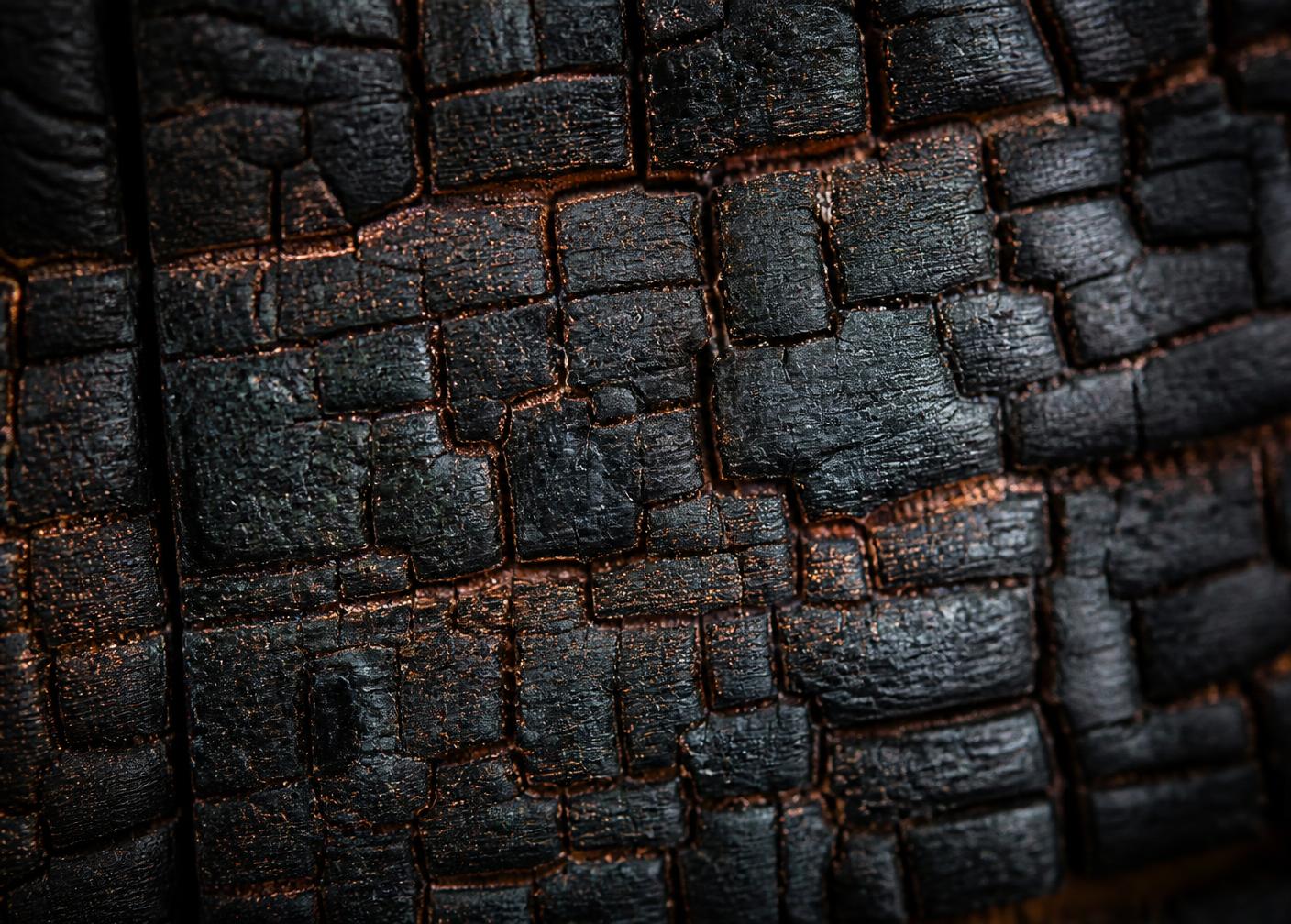
The classic deep black finish represents the most traditional approach to the technique. Achieved through deep, thorough charring with minimal brushing, this finish features:
- dramatic "alligator skin" texture where the wood grain rises in ridge-like formations
- complete carbonisation of the surface layer
- exceptional water-repellent properties
- striking contrast when used alongside lighter materials
- minimal maintenance requirements when properly sealed
This iconic look works particularly well for exterior applications like cladding and fencing, where its natural resistance to weather and pests provides practical benefits alongside its dramatic appearance.
Deep grey/silvered
A more subtle approach involves moderate charring followed by brushing that removes more of the carbon layer. This process reveals:
- elegant silvery-grey tones that evolve with exposure to light
- visible wood grain patterns beneath the charred surface
- a weathered, aged appearance that feels both rustic and refined
- slightly softer visual impact than the jet black finish
The silver-grey aesthetic has become particularly popular for contemporary interiors, where it provides organic textural interest without the dramatic darkness of full charring.
Amber/brown
Light charring combined with aggressive brushing produces warm amber and brown tones. This approach:
- preserves and enhances the natural colour of the wood
- creates subtle contrast between charred and uncharred areas
- highlights the natural grain patterns more prominently
- offers a warmer, more traditional wood appearance while maintaining some of the technique's distinctive character
Amber finishes balance the unique qualities of charred timber with the familiar warmth of natural wood, making them ideal for spaces where pure black might feel too imposing.
Natural wood highlights
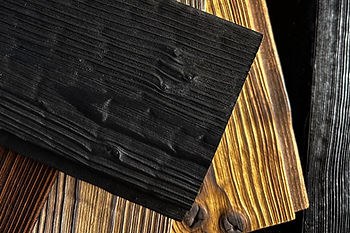
Some artisans have perfected techniques that showcase dramatic contrast between deeply charred areas and natural wood. These "tiger effect" finishes feature:
- strategic removal of char to reveal golden wood tones beneath
- pronounced grain patterns that create natural striping effects
- tactile contrast between smooth natural wood and textured charred areas
- warm visual complexity that changes dramatically under different lighting conditions
This approach celebrates the material's natural beauty while incorporating the distinctive characteristics of the charring process.
How finish type changes perception of colour
Beyond the colour itself, the type of sealant applied dramatically influences how we perceive charred wood finishes. Matte sealants preserve the organic, velvety appearance of the charred surface, enhancing its depth and texture. This understated approach works beautifully in natural settings and rustic designs where authenticity is paramount.
Satin finishes strike a balance by introducing subtle reflectivity without overwhelming the material's natural character. This middle ground often proves ideal for contemporary interiors, where the wood needs to integrate with other design elements while maintaining its distinctive personality.
Glossy polyurethane transforms charred wood into something almost gem-like, with reflective qualities that highlight the textural variations in the surface. This dramatic effect works particularly well for furniture and artistic applications where the material becomes a statement piece.
Techniques to achieve distinct Shou Sugi Ban colours
Creating specific effects with charred timber requires understanding how different processes influence the final appearance. The techniques described below allow artisans to move beyond traditional black finishes into more diverse aesthetic territory.
The burning intensity fundamentally determines the base appearance of the wood. Intense, prolonged flame exposure creates deep alligator-skin texturing and complete blackening. By contrast, a quick, light pass with the flame produces a more subtle effect where much of the wood's natural character remains visible beneath a thin layer of char.
The brushing process that follows burning allows for remarkable control over the final appearance. Aggressive brushing with stiff wire brushes removes more carbon, revealing lighter tones beneath.This technique proves particularly effective when seeking amber colours or creating two-tone effects where the grain stands out dramatically against charred backgrounds.
For those seeking even more control over the final colour, sanding after charring offers precise gradation. By selectively removing char to different depths, woodworkers can create subtle variations across a single piece. This approach requires careful technique to avoid completely eliminating the distinctive qualities of the charred surface.
Adding colour to charred wood opens up virtually unlimited possibilities. Water-based and alcohol-based stains penetrate the porous charred surface differently than they would untreated wood, creating unique effects. Alcohol inks provide vibrant, often translucent colours that interact dramatically with the textured background. For metallic effects, fine mica powders can be integrated with the sealing medium to add shimmer without compromising the material's natural beauty.
The application sequence matters significantly when working with yakisugi finishes. The standard approach follows this pattern: burn the wood first, then brush to the desired level of char removal, apply any colourants while the surface remains porous, and finally seal with appropriate protective finishes to preserve the effect and enhance durability.
Sealing represents the critical final step in achieving distinctive coloured yakisugi. Oil-based sealants like tung oil or linseed oil penetrate deeply and enhance the natural depth of the charred surface. Wax finishes provide a soft luster and tactile quality particularly suited to handled items like furniture. Polyurethanes offer maximum durability and moisture resistance, making them ideal for high-traffic areas or exterior applications where the finish must withstand environmental challenges.
Common mistakes and how to avoid them
Even experienced woodworkers sometimes encounter challenges when creating coloured shou sugi ban. Uneven burning can create inconsistent base colours – solving this requires careful flame control and systematic coverage of the entire surface. Over-brushing might remove too much char, eliminating the distinctive texture that makes this technique special. When applying stains or dyes, the highly absorbent charred surface can easily become oversaturated, resulting in darker-than-intended colours. Test on scrap pieces first and apply colours gradually, building up to the desired intensity.
Perhaps the most common mistake involves inadequate sealing. The porous nature of charred wood demands thorough protection, particularly for exterior applications or surfaces that will face moisture exposure. Multiple thin coats of sealant typically yield better results than a single heavy application, ensuring complete penetration and protection.
Where to use Shou Sugi Ban colours and finishes
The versatility of charred timber makes it suitable for numerous applications across both exterior and interior settings. Understanding where each finish works best helps ensure successful implementation in various projects.
Exterior siding represents one of the most traditional applications, where the natural weather resistance of deeply charred wood proves particularly valuable. The classic black finish continues to dominate this application, though silver-grey treatments have gained popularity for contemporary architectural facades. When using coloured shou sugi ban for exterior purposes, consider how environmental exposure might affect the appearance over time, and select UV-resistant sealants to preserve the desired effect.
Interior accent walls have become increasingly popular applications for this technique. Here, the full spectrum of colours and finishes finds expression, from traditional blacks to vibrant artistic treatments. The material adds tremendous textural interest to spaces that might otherwise feel flat or sterile. Consider how lighting will interact with different finishes – glossy treatments dramatically amplify the impact of directional lighting, while matte finishes provide more subtle depth.
Furniture represents perhaps the most diverse application category. Statement pieces like dining tables, console tables, and headboards showcase the material's distinctive character, while smaller accessories like picture frames and decorative objects make the look accessible even in limited spaces. For furniture applications, consider the balance between visual impact and practical comfort – heavily textured surfaces might prove challenging for items that receive frequent direct contact.
In landscape design, charred timber offers remarkable durability for garden structures, fencing, and outdoor furniture. The natural resistance to insects and decay makes it particularly valuable in these settings, while the aesthetic quality ages beautifully alongside plantings and natural elements. Traditional dark finishes typically perform best in these applications, though amber tones complement natural landscapes particularly effectively.
Art installations and architectural details represent areas where the most experimental and vibrant approaches to yakisugi find their fullest expression. Freed from strict practical requirements, these applications can explore dramatic colour combinations, unusual textures, and innovative finishing techniques that might be impractical for larger installations.
When selecting colours and finishes for specific applications, consider not just the immediate aesthetic impact but how the material will interact with its surroundings. Dark finishes absorb light and create dramatic shadows, while lighter treatments reflect more light and can make spaces feel more open. Colourful treatments can either complement or intentionally contrast with existing colour schemes, serving either as unifying elements or deliberate focal points.
Conclusion
The evolution of Shou Sugi Ban from a practical preservation technique to a sophisticated design element speaks to its remarkable versatility and enduring appeal. While traditional black finishes continue to dominate exterior applications, the expanding palette of colours and textures available through modern interpretations has opened new possibilities for this ancient craft.
Whether you're drawn to the authentic heritage aesthetic of deeply charred cedar, the subtle elegance of silver-grey finishes, or the bold creative potential of coloured and artistic treatments, charred timber offers distinctive character that few other materials can match.The natural variation inherent in both wood grain and the charring process ensures that each piece remains uniquely individual – a quality increasingly valued in an age of mass production.
As interest in sustainable building materials continues to grow, this technique offers a compelling combination of natural durability, minimal chemical requirements, and extraordinary aesthetic value. The transformation of ordinary wood through fire creates something extraordinary – a material that seems both ancient and contemporary, both organic and dramatic.
Whether you choose to work with professional artisans or explore this technique yourself, the world of yakisugi finishes rewards curiosity and experimentation. The interaction between wood species, burning technique, brushing approach, colourants, and sealants creates virtually limitless possibilities, all connected by the primal transformation that occurs when timber meets flame.