
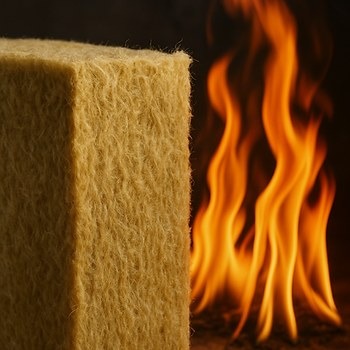
Fire safety is an important consideration in modern construction. Whether you are building a new property, renovating an existing home, or planning a commercial development, choosing suitable insulation can help improve energy efficiency while supporting a safer building design. This is where fire resistant insulation plays an important role.
Insulation is commonly associated with keeping buildings warm in winter and cool in summer. However, different insulation materials react differently when exposed to high temperatures or flames. Understanding these differences helps homeowners, architects, builders, and property developers make informed decisions.
In this guide, we explain what fire resistant insulation is, how it works, which materials are commonly used, and what to consider when selecting an appropriate solution. At Inflamed, understanding building materials and their performance is an important part of making informed construction choices.
What Is Fire Resistant Insulation?
Fire resistant insulation refers to insulation materials or systems designed to resist fire, limit flame spread, or help protect building elements from heat for a specified period. The exact level of protection depends on the material, its tested performance, and how it is installed.
Unlike conventional insulation selected mainly for thermal performance, fire resistant insulation also considers how a product behaves when exposed to fire. Some materials are non-combustible, while others may contribute to a fire but are designed to meet particular performance requirements when used within a tested construction system.
It is important to understand that fire resistant does not mean completely fireproof. No insulation product should automatically be assumed to prevent a fire or protect a building indefinitely.
The right choice depends on the building design, the location of the insulation, relevant building regulations, and the manufacturer's technical specifications.
How Does Fire Resistant Insulation Work?
Fire resistant insulation works in different ways depending on its composition and application. Some materials resist ignition, while others help slow heat transfer or maintain their structure when exposed to elevated temperatures.
Here are the main ways these materials can contribute to fire safety.
1. Slowing the Transfer of Heat
Certain insulation materials have low thermal conductivity, meaning they slow the movement of heat through a building element. When a suitable product is incorporated into a tested fire-resisting wall, ceiling, or floor assembly, it can contribute to the assembly's overall performance.
However, thermal insulation performance alone does not establish fire resistance. The complete construction system must be assessed for its intended application.
2. Resisting Ignition and Flame Spread
Some insulation products are classified as non-combustible under applicable testing standards. These materials do not readily contribute fuel to a fire under the conditions covered by the relevant test.
Other products are combustible but may meet particular reaction-to-fire classifications or form part of a tested system. Their performance must be assessed using the correct product classification and installation details.
3. Supporting Fire-Resisting Building Elements
Fire resistance is often a property of an entire construction assembly rather than an individual insulation layer. A properly tested wall or ceiling system may be designed to maintain integrity, insulation, or load-bearing capacity for a specified period during a fire.
The result depends on several factors, including the insulation, supporting structure, fixings, joints, and protective layers.
What Are the Best Materials for Fire Resistant Insulation?
Different materials offer different combinations of thermal performance, fire behaviour, moisture resistance, and installation requirements. The best option depends on the intended use.
1. Mineral Wool Insulation
Mineral wool, including stone wool and glass wool products, is widely used in buildings. Many mineral wool products achieve non-combustible classifications, although the classification of the complete product should always be checked.
Stone wool is particularly useful in applications where fire performance and thermal or acoustic insulation are important.
Common applications include:
- External wall and façade systems
- Cavity walls
- Roofs and ceilings
- Internal partitions
- Floors and service installations
Mineral wool can also help reduce sound transmission. Its suitability for a particular application depends on the product specification and the requirements of the complete building system.
2. Fibreglass Insulation
Fibreglass insulation is made from fine glass fibres and is commonly used to improve thermal and acoustic performance. Many products have good reaction-to-fire characteristics, but facings, binders, coatings, and other components can affect the classification of the finished product.
It is often used in roof spaces, wall cavities, ceilings, and partitions.
Always check the manufacturer's fire classification rather than assuming that every fibreglass product has identical performance.
3. PIR Insulation Boards
Polyisocyanurate (PIR) insulation boards provide high thermal resistance relative to their thickness. They are frequently selected for roofs, walls, and floors where space efficiency is important.
However, PIR is an organic foam insulation and is combustible. Its reaction to fire and performance within a construction assembly depend on the specific product and the surrounding materials.
When considering PIR, review the product's classification, fire test evidence, protective layers, and approved installation details.
4. Expanded Polystyrene (EPS)
EPS is a lightweight insulation material commonly used in external wall insulation systems, floors, and other building applications.
It can offer useful thermal performance, but it is combustible and requires appropriate design and protection. Its suitability for external walls or other fire-sensitive applications depends on the building requirements and the tested system.
Never select EPS solely on price or thermal performance without checking its fire safety limitations.
What Is Fire Insulation Material Used For?
The term fire insulation material can refer to materials used to help limit heat transfer, protect building components, or support fire-resisting construction. The precise function depends on the product.
These materials can be used in several areas of a building.
- External walls and façades: Insulation may contribute to thermal efficiency and, when appropriately specified, the fire performance of the façade system. Cavity barriers and fire stopping may also be necessary to limit fire and smoke spread through concealed spaces.
- Roofs and ceilings: Insulation improves energy efficiency, while fire safety depends on the complete roof or ceiling construction and its intended performance.
- Internal partitions: Insulation can contribute to acoustic comfort and may form part of a tested fire-resisting partition.
- Service penetrations: Pipes, cables, and ducts can create openings through fire-resisting walls and floors. Suitable tested fire-stopping systems help maintain the intended fire performance of these elements.
- Industrial and commercial buildings: Insulation requirements vary depending on occupancy, building design, operating conditions, and applicable safety standards.
For projects involving cladding or external wall systems, it is especially important to consider the complete façade design rather than evaluating insulation in isolation.
What Are the Benefits of Fire Resistant Insulation?
Choosing an appropriate insulation solution can offer several advantages when it is correctly specified and installed.
Improved Fire Safety
Materials with suitable fire performance can help reduce the contribution of building components to fire development. The level of protection depends on the specific product and construction system.
Better Thermal Efficiency
Many fire-resistant insulation products also provide thermal insulation, helping reduce unwanted heat transfer and supporting more consistent indoor temperatures.
Acoustic Comfort
Certain materials, particularly mineral wool, can help reduce sound transmission through walls, floors, and partitions.
Support for Building Compliance
Selecting products that meet the applicable requirements can help designers and contractors develop compliant construction systems. Compliance must be assessed against the relevant regulations and the building's specific circumstances.
Long-Term Building Performance
When correctly installed and maintained, suitable insulation can support a building's thermal performance throughout its service life. Moisture exposure, physical damage, and inappropriate installation can affect its effectiveness.
How to Choose the Right Fire Resistant Insulation
Before choosing an insulation product, consider the following factors.
- Identify the application. Determine whether the insulation is intended for a roof, external wall, cavity, floor, partition, or service penetration.
- Check fire classifications. Review the manufacturer's declared performance and relevant test documentation. Reaction-to-fire classification and fire resistance are different measures and should not be confused.
- Review thermal requirements. Compare thermal conductivity and the required insulation thickness to determine whether the product meets the project's energy-efficiency goals.
- Consider moisture and weather exposure. External applications require suitable moisture management, weather protection, and construction detailing.
- Verify the complete system. Check compatibility with cladding, membranes, fixings, cavity barriers, fire stops, and other components. A product's classification alone does not establish the performance of the finished assembly.
- Follow professional guidance. Consult qualified designers, fire engineers, or building professionals when necessary, particularly for complex façades and commercial buildings.
For projects involving exterior materials, Inflamed can be a starting point for exploring building-material options and identifying the information you need before making a specification decision.
Common Mistakes to Avoid
Even a suitable insulation material may not deliver the intended performance if it is incorrectly selected or installed.
Avoid assuming that all insulation products are fireproof, choosing materials based only on price, or relying on thermal performance as proof of fire safety.
Other common mistakes include overlooking cavity barriers, leaving gaps around penetrations, using incompatible components, and failing to follow tested installation instructions.
It is also important not to assume that a product suitable for one wall or façade system will automatically be suitable for another. Always verify the product documentation and the requirements of the complete construction assembly.
Conclusion
Fire resistant insulation is an important consideration when designing safer, more energy-efficient buildings. From mineral wool to specialised insulation boards, different materials offer different levels of thermal performance and fire behaviour.
The best choice depends on the intended application, product classification, building design, and relevant regulations. Rather than selecting insulation based on a single feature, consider how the complete construction system will perform.
At Inflamed, informed material selection can help support better construction decisions. Before starting your next project, review the available product specifications, compare suitable solutions, and seek professional advice where required.
Ready to plan your next building project? Explore the material solutions available through Inflamed and speak with a qualified professional to identify an appropriate option for your project's insulation and fire safety requirements.